



Description
Special Offer: Get 15% OFF your first FIGS order with code FIGSUK at checkout.
Shop now at https://www.wearfigs.com/
———————————————————————
UK Dentists: Collect your verifiable CPD for this episode here >>> https://courses.dentistswhoinvest.com/smart-money-members-club
———————————————————————
You can pick the perfect fund and still end up with the wrong life. That’s the uncomfortable truth we dig into with independent financial adviser Luke Hurley from Videre Financial Planning, because the biggest mistake we see isn’t investment selection, it’s skipping the vision that should sit above every financial decision.
We start with three grounding ideas: time is your most precious resource, happiness is the real end goal, and money is only the enabler. From there we get practical fast. Luke shares the questions that uncover your “why” (not just “security” or “freedom”, but what that actually means day to day), then shows how to turn values into measurable milestone goals you can plan for without pretending you can predict the future.
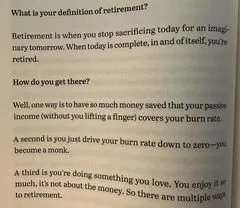
Next we define financial independence in plain English: the point where you work because you choose to, not because you have to. We talk about finding your personal “number” by auditing your real household spending, and we add UK context with retirement spending benchmarks. We also pressure test the rule of 25 and the 4% rule, including why they can mislead if you ignore State Pension, NHS pension, rental income, tax, and how spending often changes later in life. Finally, we get into why a pension can sometimes be the last pot you touch and how that links to inheritance tax planning and long term investment strategy.
Transcription
Dr James, 1m 15s:
When it comes to investing, everybody gets super excited about the investment piece as in which stocks to buy, how much to diversify the portfolio, what accounts to use, everything along those lines. But actually, there's a little bit more to it, and there's a crucial first step that has to come before we even think about anything to do with investing if we want to get the best results. Independent financial advisor Luke Hurley joins us today. He represents the Videre Financial Planning. Luke is going to be sharing with us a little bit more about what we can do in the very first place to ensure that we actually get the results we want from our investment portfolio. As ever, you can claim your CPD for this episode within the official Dentists Who Invest Smart Money Members Club. Smart Money Members Club also includes multiple mini courses and webinar series with finance for dentists, including how to become as tax efficient as possible, as well as understanding investing. All of this content counts as verifiable CPD, and you can download your certificates there and then on completions each lesson. In addition to this, we also include a whopping 10% discount on your dental indemnity and 5% discount on lab bills for dental principals, amongst other perks and discounts for members. Please use the link in the description to claim your verifiable CPD for this episode. Another episode of Dennis Invest Podcast Team with Return in Face, Mr. Luke Hurley. We're here to talk today about your vision, the strategy that you need to have in order to ensure you're making solid financial choices. When we talk about your vision, well, well, a big part of that is your is your number, uh, really crystallizing how much you need to retire. And this is something that often goes awry with people and their financial plans, given that we're all just programmed to, how can we say, just build the biggest asset portfolio that we can feasibly achieve. Uh, what that sometimes means is we're sacrificing time, time that we could have otherwise had off, or time that we could have otherwise been financially free. Luke, how are you today, my friend? Yeah, really well, thanks, James. All good my end. Awesome. Well, listen, I think this is one of those episodes where I'm going to do less talking rather than more, which I'm not so good at, but I'm gonna I'm gonna do my very best for the good of the audience, for the benefit of the audience today, because we all want to benefit from your expertise whenever it comes to deciding what param or understanding what parameters and things that we need to know in order to, how can we say, crystallize the vision, so to speak, and be efficient about our investment journey.
Luke, 3m 45s:
Sure. So yeah, for me, the uh the vision stage is probably the most important when it comes to building out a financial plan. Um it's underpinned um from a philosophical perspective by what I consider to be three key core principles, um, which you know you can you can you can debate, but for for for me they're um universal uh and and they're absolutely uh vital. So the first one is that time is our most precious resource. We've only got so many uh years of life, uh, and it's important to recognise that and to to get the most we can out of the life that we have. Um the second uh is that happiness is our ultimate goal, given that we time is our most precious resource. And the third is that money is an enabler or a tool um for us to um live the best life possible. So those three principles for me underpin financial planning. Um, and it's key then to drill down well, okay, we don't know for certain, but how much time realistically could you have left? Um, because goals are um uh in an ideal world, they're they're uh measured in terms of time and and duration and um time horizons. So um we can look at ONS data and we can make some accurate guesses around that. Then in terms of addressing um you know money money as a tool and enabler, the question there is what for? So you know it it's different for everybody. What is your money really there for you to achieve, what's important to you in life? Um and that's about that that's where it comes we come on to the first section, which is understanding or or realizing what your why is, what your purpose is, what the meaning is, your North Star, um what is the driving force behind your financial plan? And it can be as simple as jotting down really what your values are, what's um what what you know what what is at the core of of what you're looking to achieve. So simple questions like um what is mu most important about money to you, what's the money for, what makes you happy, um, what are the experiences you you you most enjoy, what are the environments you most enjoy them in, who do you most enjoy spending your time with. All of those questions should elicit the information around what's what's most important to you in in life, um, and that should be right at the top of your financial plan, driving most of your decisions, um, and and you know, you should you should be aligning your values with your with your money. Um, so for me, some simple questions like that. Um what I what I I I hesitate or or what I don't like to see at that point is somebody saying, Well, the most important thing for me is financial security. It's okay, well, financial security to allow you to do what? So it's it's taking it a step further than than simply um some of the the regular answers that you see, which is fine. I want financial freedom. Okay, well, freedom to do what exactly? What do you want to use that extra time for? Um, that's how you really dive deeper into the question of what is your why, and that's how you start working your way through. If we talk about Maslow's hierarchy of needs, that's how you start working your way up the the levels um towards self-actualization if you're if you're talking about the top of the the pyramid. Um, so that's that's for me is the starting point.
Dr James, 6m 51s:
You know what? And when you were saying just then, I uh I used to be off I I've I've I've grown up a lot, I hope, in the last few years. And one thing that I never ever bothered to do uh back in the day was actually have a goal, really, or a hug I had goals, but maybe not crystallized goals. Like this is exactly how I want it to look, right? Because I swear the number of times you write down what you're actually trying to achieve, you'll realize that a lot of your actions are completely paradoxical to you achieving that goal. So for example, I'll say this, right? Uh, time for kids, right? You're actually working really hard to get all this money to have time for kids, right? You know, that's that's the goal whenever it comes to financial freedom or financial planning, right? But in reality, you probably have the assets to be able to be retired and have the time to do that years ago, but you feel you're so programmed and you're so conditioned from years of doing it to think that you continue to have to do it. But you don't know what that is until you write it down. And that's maybe for someone who's like, I don't know, middle-aged, 40s, something along those lines. That's one example. There'll be loads of them out there.
Luke, 7m 53s:
Yeah, it's it's shining a light, um, reflecting, and then really considering whether your actions are aligned with your values. Um, and there's lots of people that sort of sleepwalking and pay lip service to this stuff, but they're not actually um you know, engaging with it and and and aligning what they do with with with what they're what they're necessarily saying.
Dr James, 8m 15s:
Awesome. So that's the first stage, I suppose, in crystallizing your vision, and then how does it develop from there?
Luke, 8m 21s:
Yeah, first stage for me is um work out what your why is. And there's from a from a planner's perspective, there's other questions that we do, and we can go in a deep dive. And it may be that somebody answers those questions and realizes that they've gone completely the wrong track, in which case there's other professionals that they might want to speak with. But it's just a useful exercise to add context and to frame a financial plan. Um, once you've done that, the next step really is to go into some more specific goals, um, which some people are put off by the word goals, and and um it can be quite a daunting process for for some people, it's a bit of a loaded word for some people. Um, for me, it's quite easy. It's it's there's there's there's two main categories. You've got uh what I would consider to be um spending goals or milestone goals, which are very specific uh events with attached spending requirements. For example, for me, I know I've talked to you talked about this on the on the podcast before, but that might be for me. Um, my children going to university, it might be my children getting married, it might be gifting some money to help them get on the housing ladder, for example. That's very specific. I can attach uh a time horizon to it, I can attach a monetary amount to it, um, I can really give it some um some some some context. Um, so that that's the first type of goal, and and they're really that that involves some guesswork. Okay, you can't get this stuff entirely accurate, but it's about putting some stakes in the ground, having some guesses about what the future might hold. Think of family milestones, work transitions, you know, ambitions on that front, business targets, important birthdays. Uh, it might be real lifestyle stuff, it might be particular going on a particular type of holiday, it might be um changing a property, buying a bigger house. Whatever it might be, it's a it's a clear milestone goal that's that's got some form of spending um attached to it. They're one-off costs that we need to factor into our and into our plans.
Dr James, 10m 10s:
I can tell you thought about this in great detail because it's very much like bang, bang, bang. These are the components, this is the precise point at which you think about this, and this is how it works. And I I remember you telling me that stakes in the ground analogy uh a while back, and I really like that. You know, it's just a point to navigate towards rather than it being a fixed outcome that we're going to necessarily achieve, because you can't you can't say when it's gonna be. You can never say when someone's gonna get married, particularly if they're like five years old. Will they ever get married? Exactly.
Luke, 10m 41s:
They may never get married, right? But um, if they do, I'm gonna be prepared for it. Um, so yeah, measurable and time-bound in an ideal world, that's what we want these goals to be. We should be able to measure them and we should be able to attach a time horizon to them. That's key. Um, and these are gonna be different for everybody. I mean, I I from my experience, I see a lot of the same kinds of things come out through the discussions that I have with clients. Um, but you know, everybody's got different uh goals and objectives, and and things are you know look slightly different, and also based on life stages as well, there's there's there's clear differences between people.
Dr James, 11m 15s:
There we are. So get some stakes in the ground and get some figures associated with those. And then I suppose we're thinking to ourselves next, okay, cool, how do we start making progress towards that really?
Luke, 11m 28s:
That's yeah, so the the the the um future step is really looking at the strategy to to to achieve those goals, right? But the um on top of the milestone goals or the the spending goals, we've got our universal ultimate number one financial goal for everybody, which is financial independence. Um and so when I said I don't think it's actually that difficult to go through a goal setting process. Really, that's because the the most important goal for most people when they're building up their wealth is to know um what do they need in order to be financially independent um in the future? Now, financial independence is uh the point at which you're working because you choose to, not because you have to. So it it's quite clear. Um, and it's it's about measuring um when or how much is enough for you individually as a household, how much is enough for you to achieve the lifestyle you want without having to go into work to build up your resources any further.
Dr James, 12m 19s:
Do I recall you telling me once upon a time there's a distinction between financial freedom and financial independence?
Luke, 12m 26s:
Um I kind of I I do use them interchangeably. I I think um I think you can achieve financial freedom before you achieve financial independence if you would really want to drill down into it, um, because it might be that you change your working environment and and it's more a little bit more in the present term as opposed to um financial independence, which is is for me very much tied to going to work. Um so yeah, I think there's maybe slight differences, but I also see them used i interchangeably.
Dr James, 12m 56s:
Um it's go on, sorry, sorry.
Luke, 12m 59s:
No, no, go you go. Sorry.
Dr James, 13m 0s:
I was just gonna ask, is there any sort of distinct and the re I'm asking this, do you, you know, from the point of view of you being immersed in this world as a professional, is there any sort of distinction or terminology that's used insofar as let's say you hit the point where you've got financial f financial freedom, if we want to term it that, right? Where you've literally your uh the money, your cash flow from your investments covers your outgoings. But that's it. Are you with me? It literally keeps the electricity on, keeps you fed and watered, like a decent lifestyle, right? But there's not really a whole lot there on top to go and party and do other and do fun stuff and experience life.
Luke, 13m 38s:
Yeah, I think there's different t yeah, totally. Um for me, the way I've now defined financial independence, it's it's tied to somebody's desired lifestyle, which includes um your essential spending, you know, your survival costs, shall we say, and your personal discretionary spending. There is a I think I do feel that it needs to be aspirate aspirational. I don't think you necessarily need to say, you know, I think I think you can sh aim higher, and some people might call that financial abundance or financial freedom, and where it's about pushing that even further up. Um, I have seen certain uh charts where they say, you know, financial security is getting all your basics covered, then you've got financial independence, and then you've got financial freedom, which is what you, as you say, it's it's about going further and really pushing that discretionary spending. It it's yeah, it's it's all it's all a it's all useful, however you want to categorize it, it's about working out what your the cost of your lifestyle is, and if you want to pushing nudging that up to not only be the lifestyle you've got now, but the lifestyle you want uh in in the future, and that's really how you work out your number. Um, so the the um the key is it's a personal figure per person, how much is enough for you? Um, why is that important?
Dr James, 14m 49s:
Well UK dentists, dentists who invest now has an official platform where you can learn about finance and obtain UK compliant, verifiable CBD at the same time. The only platform that exists on which you can do both. The Smart Money Members Club has hundreds of hours of mini courses, webinar series, and live day recordings on all things finance slash tax efficiency for UK dentists. This includes complete courses on how tax works for UK dentists, finance so that you can invest and grow your own money, business so you can improve your profitability as an associate or principal, and for those out there that want it, there's also a mini course and how you can responsibly enter the crypto space using measured amounts of capital. I've gathered this content from the best of the best I could find in each respective area so that you know that this is how people at the forefront of each field advise their clients. The Smart Money Members Club also contains discounts on common things that UK dentists need to pay for on a regular basis. This includes a whopping 10% discount on dental indemnity, the offer to beat your income protection deal no matter what you're paying, and for the principals out there, 5% discount on lab bills and 10% discount on practice insurance. These are designed to offer hundreds, if not thousands, in annual savings. The purpose of this members club is to not only boost your monthly income but also manage your outgoings as much as possible and therefore create more profit. To celebrate the launch of the Smart Money Members Club, and given that the CPD deadline is coming up soon, I've decided to offer the first month for this platform entirely for free. This offer will end in the coming weeks as soon as the current CPD cycle is up. To collect your CPD for this podcast episode using the Smart Money Members Club, feel free to use the link in the description of this podcast.
Luke, 16m 41s:
I think I I you know ultimately there's three types of people. There's those that don't have enough, you know, then they're not they're not on the right trajectory, they're not going to achieve financial independence, they haven't been saving enough for for their retirements. Unfortunately, in the UK, that that at the moment is the is the landscape for an awful lot of people, um, worrying levels, in fact. Um you've got those that get it just right, they've got enough, and they have timed things perfectly, they've they've done their planning, uh, they've been on the right trajectory. Um, and then you've got the third camp, which is those that have too much. And what I mean by that is their their family, their household, the future generations are due to pay a pretty healthy tax bill um on their demise through inheritance tax, where they've worked hard all their life and paid tax, and then what's left is then taxed on death. Um, so kind of three categories. Now, for dentists, do I see those that don't have enough? Well, I've I've met I've met some, but most people tend to be on the right trajectory. Um I do see lots of people fall into the camp of having having too much um and therefore needing to put in place some some form of plan to deal with their their uh inheritance tax liabilities further down the line. Um so yeah, there's there's the three camps. Now why that's important for me is if you don't know that there's we're human, so our number one fear, or most people's number one fears uh when it comes to money is running out, okay? So it's a it's a it's a deep down human fear we're gonna run out of money, and that's natural. Um if you don't know that you've got enough, then you can go throughout life living the life of somebody that didn't have enough, and that's that's the key thing to understand. Defining whether you're on the right trajectory actually informs your decisions today.
Dr James, 18m 25s:
So it's about plotting forward and working out when you're gonna have enough, and then you can come back into the present and make various and make sure Dennis who invests now has those original principles that you're living life in your term making the most of it. UK compliant verifying. You know what? I almost interjected then into key little quotes. The Smart Money Memories Club has hundreds before you went into the series and allowed the recording. But here's the thing, we did actually give a little bit of the tax whenever we use Dennis words. So this includes complete quotes in how tax works for UK Dennis. Um finance so that you can invest so you can improve your profitability as an associate or principal. And for those out there that want it, there's also mini chords on how you can responsibly enter the crypto space. People like myself is helping people have that clarity. I've gathered this content from the best to the best I can find in your perspective area so that you know. It includes offering 10% discount on dental indemnity to offer to beat your income protection bill no matter what you're paying, and for the principals out there, 5% discount on lack bills, and 10% discount on practice insurance. These are designed to offer hundreds, if not thousands, of annual savings. The purpose of this members club is to not only boost your monthly income but also manage your outcomes as much as possible and therefore create more profit to celebrate the launch of the Smart Money Members Club and given that the CPD deadline is coming up soon, I've decided to offer the first month for this platform entirely for free. This offer will end in the coming weeks as soon as the current CPD cycle is up. To collect your CPD for this podcast episode using the Smart Money Members Club, feel free to use the link in the description of this podcast.
Luke, 20m 21s:
But you're only funding one person's ISO and £20,000 is being saved. Well, £80,000 is being is being spent in one way or another. And then it's about being intentional and going in and having a deep dive as to okay, where is that £80,000 actually going? Um, and then you might find some leaks, you might find that there's some some some wastage along the along the way, or you might just find that actually that's your that's the cost of your lifestyle, and that's what you that's what you're aiming for. Um, but that's that's that's how I would go about working out what what you need um as a household.
Dr James, 20m 52s:
And you know, I actually love that method that you highlighted just then because there's probably a very deep part of our human psyche that tries to not acknowledge how much we are truly spending. And if you just literally look at the numbers, there's nowhere to hide. And I I get it, we can modify that and we can reel it in and what have you, but at least it's a place to begin. So that's some very, very, very simple, actionable information for anyone listening to the podcast today. You can use it to figure out your number per se, and then naturally that's gonna change and move around with time, given that retirement for most people is many decades away. So naturally, inflation is gonna move that around and what have you. But it's it's it's a cool, it's a cool exp ah, I almost said the word experiment, but I mean I don't know, I don't know if it's an experiment so much. It's a cool, how can we say, yeah, just thing to look into and investigate, really.
Luke, 21m 42s:
Yeah. Um some interesting facts. So uh I was reading these earlier. So 77% of people in the UK don't know how much how much they need in retirement, um, based on the survey completed. Uh, 51% of people think that the amount that they're being forced to pay into their pensions through alter enrollment is enough to see them through. Um, unfortunately, for lots of people, that's that's not going to be the case, which is why it's important to interrogate these numbers. Um, 20% um are confident that they are saving enough for retirement. So only 20%, one in five people have that level of confidence, which is why that clarity and and and actually knowing that you're on the right path is so so important. Uh 70% say that targets would help them save more, um, which is really what we're trying to do, putting those stakes in the ground. Um, 51% of people focus on their current needs and wants at the expense of providing for the future. That's I think that's a human tendency, okay. That's a natural, excuse me, um, uh behavioral um uh trait of human beings. Uh, and 70% of uh 35 to 54 year old self-employed savers have less than £25,000 in a pension. Um now I I don't see too many dentists in that position if I'm honest, and this is a national UK wide survey, but it it's just some inter interesting context, I think, in terms of where we are as a nation.
Dr James, 23m 3s:
Seventy per cent of thirty five to fifty five year olds have less than twenty thousand in a pension. No way. Oh my goodness.
Luke, 23m 12s:
Wow, that is we call it a savings gap.
Dr James, 23m 15s:
the or the savings gap it's it's a concept widely talked about in the in the financial planning profession that we've got so many people that that just are not saving enough money for for the future and you know there's actually a flip side to that which is interesting and I sometimes observe with dentists even if let's say I say I talk you you know when you talk to dentists on the phone and they're like oh yeah I'm gonna do my very best to max out my ISA this year I was pretty close last year I got the 18000 in and you're like even you know forget even maxing it out what a fortuitous place to be that's unbelievable that's amazing right but dentists don't necessarily realize uh how can I say how how how blessed they are sometimes on that front and also how that can sometimes mean that actually they might have a lot of the things in place they need to retire already given that their savings are so massively boosted rel relative to other people but if you're mingling in with in other dentist circles well your bar is going to be not really so much representative of you know your your your kind of frame of reference is not going to be representative as to where other people are so when you hear stats like that it's just like Jesus that's that's crazy. Context isn't it yeah it just makes you reflect and it makes you think actually do you know what it's really important I think about this stuff because I probably am oversaving and overworking the um there's a there's a body of research that's updated every year which looks at um the the national averages for retirement spending which again I think is useful to to share with people um excuse the coughing I've recently come out of a bout of COVID.
Luke, 24m 53s:
So for a single person um they have a level that they say is like the minimum level that people should be aiming for. So for for a single person that's £14,400 a year. In London that's £15,700 a year which for me is I mean it's real survival stuff it people are going to really struggle on that um to to make ends ends meet in the in the current um economy as a couple that goes up to £22400 or in London £24500. The moderate level of spending nationally um they've labelled £31300 for a single person 32800 when you're in in London um 43100 for a couple or 44900 if you're in London and then what they deem to be a comfortable retirement level for somebody that's on their own that would be 43100 in London 4500 as a couple it's 59000 in London 61200.
Dr James, 25m 49s:
So that there's some very very um rough averages for for the national picture uh for a dentist the takeaway should be that um as a if if that if we're a couple then we should be aiming for 60k plus um and that's that's once everything's paid off ideally you know your mortgage is gone that's just money that's been spent on living life um on lifestyle for a single person as I say 43 or 45 thousand um per annum to um to cover all your outgoings discretionary and essentials interesting context is so valuable context is so valuable right because each one of us our realities are to a greater or lesser degree distorted from the average that's out there and that can work both ways you know it's not just we're not just talking about the finance of dentists we're talking in every other area of our life how do you know that you're doing well you're doing not so well where you could be where you should be unless you understand where the bar is and that's why I love those stats makes you think once you have the um the the number that you're aiming for the um so some some people will will talk about the rule of 25 which is you take the the income figure that you need you multiply it by 25 uh which ties in with what we call the 4% rule and that will give you a capital sum.
Luke, 27m 11s:
So the capital sum is is the amount that you're aiming to have in uh in savings investments pensions for you to to to draw down on to to uh ensure you don't run out of money now that's based on some research based in the US which in in rough terms and and there's lots of um caveats to this and it's very simplistic suggests that if you have a if you invest a lump sum of capital and you take four percent at the outset so let's say a million pounds is invested and you take 40k a year if you increase that every year with inflation um as a as a portfolio withdrawal then based on back testing of historic scenarios you you shouldn't run out of money now there's there's caveats to that that's US based is there's gray areas around that around charges and various other things but that's that's that's often if you hear about the 4% rule that's what it's alluding to and to get to that figure is simply work out what the income amount is and multiply it by 25. Now for from my perspective that is there's lots of flaws in that which is um namely it doesn't allow for regular sources of income so it does not uh factor in state pension NHS pension it doesn't factor in buy to let income rental property income you know it's it's uh it doesn't allow for changes in income over time so on average um people probably spend about 40% less um in their 80s than in their 60s so that method of thinking of just working like that original income figure just purely looks at at the same amount all the way through I think that's flawed. So there's there's lots of lots of flaws in in the in the process it it's useful as a back of an envelope calculation fine um but really what our role is as financial planners is to use financial modeling software to actually have a bit more of a deep dive into that and work out how your number's going to change over time and then overlay that with where are the what resources and what assets can you use factoring in tax implications of different tax treatments from from different accounts how will you meet that spending requirement to enable you to be financially independent um so there's a lot more complexity when it comes to actually taking that number and then delivering a financial plan.
Dr James, 29m 18s:
Another thing to point out about that rule of 4% is that just as you were saying, obviously it doesn't factor in income from other sources to let's say somebody's business or let's say somebody's uh well specifically somebody's dental practice. And there's this whole mindset where we have to get this to we have to start uh how can we say uh divesting or you know changing our investment portfolio when it when it's in our pension or when it's in our ITA uh switching it around so that we're not as heavily exposed to assets that retain or the assets that give us how can we say uh like orientated towards growth or orientated towards returns whereas if you actually have enough income from your other assets you might just choose to leave your pension just to compound ad infinitum it doesn't you don't actually have to touch your pension. Yeah so here what I'm saying is what I'm saying is um that actually if you're stashing away loads of money in the pension just realize that it might even not even necessarily be for you whenever you get there that's crazy it's actually for your kids yeah it's it's what I'm saying is people make this stuff really simple but there's way more to it than what meets the eye.
Luke, 30m 28s:
The the pension is a great example because when we do retirement plans for people often it's one of the last um accounts that we're we're modeling for somebody to access because of the um the inheritance tax side of things so if let's some say somebody has capital in their in their estate maybe they've sold a a business and they've released some capital it makes far more sense for them to draw down on that capital rather than the capital in their pension where where the the tax treatment is different around inheritance tax. So yeah completely and that's where having a proper financial plan and knowing that is is absolutely vital um because it enables you to then come back and go okay well actually if the pension is one of the last things that we need to touch then the time horizon isn't 60 for example for the pension and therefore um where you get there's some investment products out there where they say that you know 60 is like the finishing line and that they're going to change the asset location the asset mix of the portfolio as you get closer to that point well actually if you do a plan and you and you realize that the the pension is is actually going to be there until you're possibly in your 90s or or beyond and it's going to pass on to future generations and it's an intergenerational account then it might be that you come back and change the asset mix.
Dr James, 31m 39s:
Plus you've stashed a lot of money away throughout the course of your journey that you might have been able to I don't know have a little bit of fun with as well potentially potentially potentially it just shows why planning is so helpful and understanding this stuff. And it actually it's about 50 reasons that come back to what we were saying at the start why figuring out your vision is so important. Because you probably might be working way harder than you need to until you figure out your goals quite literally.
Luke, 32m 3s:
It underpins everything and and and that's it it's it's about addressing the fear of running out of money, bringing things back into the present and then making your decisions with that with that information, informed decisions, make smart choices um and uh yeah uh check that you're on the path right on the right path and if you're not do something about it.

BY SUBMITTING MY EMAIL I CONSENT TO JOIN THE DENTISTS WHO INVEST EMAIL LIST. THIS LIST CAN BE LEFT AT ANY TIME.